MLM Software Tech Series – Part 1 Genealogy Tree Management

Understanding MLM Genealogy Tree Management for a Global Direct Selling & Network Marketing Business
Introduction: The Invisible Foundation of Every Successful MLM Network
Every fast-growing direct selling business knows that sales alone do not build a long-term network.
What truly drives stability, transparency, and predictable growth is the structure of the network itself.
In the world of network marketing business models, this structure is managed through one powerful tool:
The MLM Genealogy Tree
A genealogy tree is more than a visual chart.
It acts as the backbone of your entire organization.
It shows how distributors are connected, who sponsored whom, the growth pattern of your team, performance metrics, commissions, eligibility, ranks, and the depth of your expanding network.
Without a proper genealogy system, even the most promising MLM company eventually collapses under its own growth.
This is why modern businesses rely on advanced MLM software like Ventaforce to manage network structure, team genealogy, payouts, and real-time downline updates.
But to understand its value, you must first understand the full scope of genealogy management.
This article provides a complete, deeply detailed exploration of MLM Genealogy, written for global direct selling enterprises, MLM startups, corporate admins, and distributors looking to master team structure management.
What Is Genealogy in Network Marketing?
In the simplest terms:
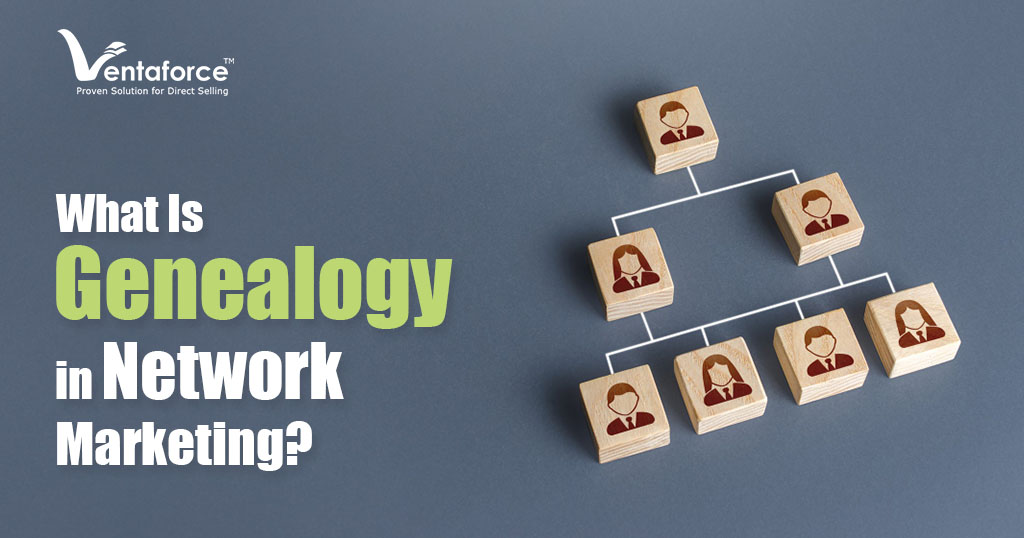
MLM genealogy is a visual representation of your distributor network.
It displays how members are linked to each other inside a network marketing business, arranged in a hierarchical “family tree” structure.
From the top sponsor, the tree extends down through multiple levels, showing every recruit, sub-team, and leadership line.
A good genealogy system includes:
- Personal distributor information
- Sponsor details
- Rank and performance data
- Placement structure
- Sales volume
- Commission eligibility
- Team activity (active / inactive)
- Joining history
- Growth trends
- Lineage movement
Most importantly, genealogy helps track and manage your team, ensuring that every member is correctly placed as per the company’s compensation plan.
In traditional MLM companies, genealogy was maintained manually—but today, with hundreds and thousands of distributors, manual tracking is impossible.
This is why advanced direct selling software automates genealogy entirely.
Why Is Genealogy Important in Direct Selling and MLM?
Genealogy is not just an organizational chart—it is the strategic control center for every function in a direct selling business.
Here’s why it’s essential:
It Shows the Real Structure of Your Network
A genealogy tree allows companies and distributors to understand:
- The size of the team
- Who recruited whom
- Who is active
- Who is inactive
- Where the strong legs are
- Which areas need development
Without this clarity, running an MLM becomes chaotic.
It Ensures Accurate Commission Calculation
In a network marketing business, commissions depend heavily on:
- Levels
- Depth
- Volume generated
- Sponsorship lines
- Leadership structure
- Leg strength
An accurate genealogy tree ensures:
- No wrong payouts
- No missed bonuses
- Correct rank calculations
- Perfect commission eligibility
MLM companies survive on trust, and trust comes from accurate payouts.
It Prevents Fraud and Misplacement
Incorrect placements, duplicate accounts, cross-line manipulations, and wrong sponsoring can destroy your network.
A robust genealogy system:
- Locks each distributor’s sponsor
- Prevents wrong placement
- Blocks unauthorized team movement
- Maintains audit trails
- Tracks ID validity
This helps your MLM stay compliant worldwide.
It Helps Leaders Manage Their Downline
Distributors can see:
- Their personal recruits
- Their team activity
- Their downline performance
- Their rank status
- Their income potential
It also helps leaders identify:
- Weak legs
- Inactive members
- Potential leaders
- Training needs
- Teams needing support
A visible team means an empowered leader.
It Supports Global Expansion
As your direct selling business expands across cities or countries, your genealogy tree keeps everything aligned:
- Multiple markets
- Multi-currency
- Multiple languages
- Regional teams
- Global activation patterns
With good genealogy, you can manage your entire global network from a single system.
Purpose of the MLM Genealogy Tree
The genealogy tree serves many purposes:
- Tracks recruitment relationships
- Shows downline depth
- Displays growth patterns
- Reflects sales performance
- Identifies rank progress
- Helps manage placements
- Provides accountability
- Helps with compliance checks
- Supports bonus calculations
Both distributors and corporate teams rely on genealogy for daily operations.
What Is an MLM Genealogy Tree?
An MLM genealogy tree is a structured, layered representation of your network.
It typically starts with:
- Business owner or admin at the top
- Leaders at the next level
- Distributors further down
This hierarchical structure makes it easy to understand:
- Lineage
- Sponsorship
- Team hierarchy
- Placement
- Leadership lines
A genealogy tree is not static—It grows, evolves, and spreads as your network expands.
Benefits of Having an MLM Genealogy Tree in Your Network Marketing Business
Below are the deepest, most practical benefits:
1. Clear and Organized Network Structure
Your entire team is visible within seconds.
The genealogy:
- Centralizes all information
- Updates automatically
- Shows every level of depth
- Displays every new joiner
- Helps avoid confusion
For a distributor, this is their “business map.”
2. Smooth Team Communication and Collaboration
The genealogy tree allows:
- Uplines to guide their downline
- Teams to work together
- Leaders to communicate easily
- Better flow of motivation and training
When your team understands the structure, they can work more effectively.
3. Simplified Leadership and Team Management
Leaders can:
- Track performance
- See who is progressing
- Identify inactive legs
- Offer personalized support
- Plan rank advancement
The genealogy is a leadership assistant.
4. Commission Tracking and Bonus Distribution
The genealogy tree makes it clear:
- Who qualifies for what
- Which volume contributes to which leader
- How bonuses should be calculated
Accurate genealogy avoids disputes and increases trust.
5. Strategic Recruitment and Placement Planning
You can identify:
- Strong legs
- Weak legs
- Potential leadership lines
- Areas to focus on
- Where recruitment is needed
This helps maximize your network marketing growth.
6. Rank Advancement Visibility
Distributors can see:
- How close they are to the next rank
- What targets they still need
- Which team members must activate
- Which legs need improvement
This motivates them to take action.
7. Better Duplication and Training
Good genealogy enables:
- Seamless duplication systems
- Consistent training
- Stronger mentorship lines
- Unified team development
Duplication is the heart of MLM success.
8. Historical Data & Growth Analysis
Companies can study:
- Long-term trends
- Where rapid growth happened
- Seasonal patterns
- Team behavior
This helps in strategic planning.
What Details Are Included in an MLM Genealogy Tree?
A powerful genealogy tree contains:
1. Distributor Information
Your entire team is visible within seconds.
The genealogy:
- Name or ID
- Contact details
- Sponsor
- Join date
- Rank
- Country
- Activation status
For a distributor, this is their “business map.”
2. Placement Structure
- Sponsor
- Upline/upline chain
- Placement leg
- Level number
3. Performance Metrics
- Personal sales volume
- Team sales volume
- Business volume
- Qualifying volume
- Autoship activity
- Leadership status
4. Commission Tracking
- Earned commissions
- Pending payments
- Released payments
- Bonus eligibility
- Level-wise commission indicators
5. Rank & Progress
- Current rank
- Next rank goals
- Percentage achieved
- Leg requirements
6. Downline Details
- Total downline
- New recruits
- Recent activity
- Growth speed
7. Global Team Segmentation
- Country-wise distribution
- Language groups
- Local leadership
- Market expansion data
Types of MLM Genealogy Trees
Even without diagrams or tables, here is a clean, simple breakdown of each:
1. Binary Genealogy Tree (Two-Leg Structure)
- Two legs: left and right
- Only two direct recruits per person
- Extra recruits spillover to lower levels
- Commissions based on the weaker leg
- Encourages balanced team building
This is one of the most popular MLM structures worldwide.
2. Unilevel Genealogy Tree (Unlimited Width)
- Unlimited first-level recruits
- Wide structure
- Commission based on levels
- Higher ranks unlock more levels
Perfect for strong recruiters.
3. Matrix Genealogy Tree (Fixed Width and Depth)
- Limited width (e.g., 3 per level)
- Limited depth (e.g., 5 levels)
- Spillover helps weaker distributors
- Balanced growth model
Ideal for teamwork-driven companies.
4. Breakaway Genealogy Tree (Leadership-Based)
- Starts as unilevel
- When a leader reaches a rank, they break away
- They become an independent team
- Upline earns overrides from breakaway teams
Mostly used by old, large MLM companies.
5. Hybrid Genealogy Tree (Mixed Models)
- Combines multiple plan types
- Allows width + depth + leadership growth
- Flexible and highly scalable
- Often used by modern global MLM companies
Hybrid plans give companies creative freedom.
The Ultimate MLM Compensation Plans Guide for Direct Selling Success
Common Mistakes to Avoid When Building Your MLM Genealogy Tree
Building a strong genealogy tree requires intention, planning, and consistent follow-through. Many distributors unintentionally weaken their network by making simple but costly mistakes. Here are the most frequent pitfalls—and how to avoid them for a healthier, long-term MLM structure.
1. Placing New Members Without Strategy
Positioning a new distributor randomly can disrupt balance and reduce team performance. Placement should reflect:
- The strengths of the new member
- The existing leg structure
- Long-term rank goals
- Team development needs
Strategic placement is the foundation of a strong lineage.
2. Failing to Provide Immediate Training
Even the best-placed recruit becomes inactive without guidance.
Lack of onboarding leads to:
- Confusion
- Slow progress
- Low confidence
- Early dropouts
Training should start from day one.
3. Focusing Only on Width Instead of Depth
Recruiting widely without developing depth results in:
- Poor duplication
- Weak leadership lines
- Lower residual income
- Unstable rank qualifications
Balanced width + depth = sustainable growth.
4. Using Inadequate or Outdated Tools
Relying on spreadsheets or basic tools can create:
- Placement errors
- Lost data
- Compliance issues
- Misaligned teams
Investing in strong MLM software ensures stability and accuracy.
Tips to Strengthen and Stabilize Your Downline Structure
Want a more engaged and productive network? These strategies help create a stronger framework for long-term success.
1. Offer Early Onboarding and Continuous Education
Start with:
- Welcome calls
- Simple training materials
- Clear explanations of genealogy and team role
A well-prepared member becomes a confident, active distributor.
2. Encourage Consistent Team Activity
Motivate your team through:
- Challenges
- Milestone rewards
- Recognition programs
- Peer accountability
Active teams grow faster and stay connected.
3. Use Visual Tools to Highlight Team Structure
Show your genealogy tree during team meetings or coaching sessions.
Visuals help:
- Build ownership
- Improve clarity
- Strengthen leadership
- Inspire growth
Seeing the bigger picture helps everyone contribute more effectively.
4. Conduct Regular Genealogy Reviews
Monthly audits allow you to:
- Identify inactive branches
- Spot upcoming leaders
- Balance leg strength
- Correct placement issues early
Small adjustments prevent major structural problems later.

How MLM Software Helps Manage Genealogy
Modern genealogy management would be impossible without MLM software.
Here’s what a powerful MLM platform like Ventaforce provides:
1. Automated Genealogy Generation
Every new distributor is placed correctly with:
- Zero human error
- Real-time updates
- Accurate sponsor assignment
2. Real-Time Downline Activity Tracking
Leaders can instantly see:
- New recruits
- Sales performance
- Rank progression
- Team movements
3. Automated Commission Calculation
MLM software calculates:
- Direct sales commissions
- Team bonuses
- Leadership bonuses
- Overrides
- Rank rewards
All based on genealogy data.
4. Spillover and Placement Control
The software:
- Places extra recruits properly
- Maintains structure balance
- Follows plan rules automatically
5. Reporting & Analytics
Companies receive:
- Growth analytics
- Performance reviews
- Leg performance
- Market expansion trends
6. Global Network Management
Supports:
- Multi-language
- Multi-currency
- International teams
- Regional commissions
Perfect for global MLM expansion.
Features of a Good MLM Genealogy Software
A powerful genealogy system should include:
- Simple interface
- Real-time updates
- Secure access levels
- Rank tracking
- Commission engine
- CRM integration
- Ecommerce sync
- Mobile-friendly layout
- Role-based permissions
- High scalability
From genealogy automation to global payout engines, Ventaforce provides a complete set of 900+ enterprise-grade capabilities built for modern direct selling companies. Discover the full power of an all-in-one MLM platform.
Conclusion: Genealogy Is the Heart of Network Marketing
Your genealogy tree is not just a visual map—
It is the life system of your entire network marketing business.
It determines:
- How your team grows
- How income is calculated
- How ranks are awarded
- How compliant your MLM remains
- How your company scales globally
With advanced MLM software and strong genealogy management, your direct selling business becomes structured, transparent, and ready for exponential expansion.
Frequently Asked Questions
Genealogy is the visual structure of the network.
Downline refers to all distributors under a particular leader.
Sponsor details, placement leg, rank, sales volume, downline size, commissions, activity status, etc.
They are simple, team-focused, and create spillover support for distributors.
Yes. Most modern MLM software allows custom genealogy formats.
When extra recruits are placed automatically under another team member due to structure limits.
It determines eligibility and earnings based on team structure and plan rules.
Sponsor: Who recruited the person.
Placement: Where the person is positioned in the tree.
Yes. Good MLM software supports global downlines, multi-currency, and multi-language.