How Social Selling & Influencer Marketing Are Reshaping Direct Sales in 2026 ?
In 2026, direct selling is no longer defined by door‑to‑door pitches or printed catalogs—it is being reshaped by social selling and influencer marketing as core growth engines. Recent industry research shows that a significant majority of buyers now trust recommendations from people they follow on social platforms more than traditional advertising,
with some studies finding that up to 70% of consumers rely on social media interactions before making a purchase or joining a business opportunity.
At the same time,
nearly 80% of top sellers report that social selling techniques help them build deeper engagement and close sales more consistently than offline methods, underscoring a clear shift in how direct sellers connect with customers and prospects.
As communities, content creators, and social interactions become central to everyday buying decisions, social selling and influencer‑driven strategies are emerging as the defining forces behind direct sales growth in 2026.
What is MLM Software? The Ultimate Guide for Direct Sellers
What is Social Selling and How It Works ?
Social selling is the process of building relationships and trust online to generate sales or business opportunities. Unlike traditional sales methods that rely on cold calls, door-to-door visits, or mass marketing, Instead of pitching products immediately, social selling focuses on educating, engaging, and connecting with people where they already spend time—on platforms like Instagram, Facebook, LinkedIn, TikTok, and WhatsApp.
Did You Know?
According to LinkedIn’s State of Sales report 2025, sellers who actively use social selling tools are 51% more likely to achieve their sales targets compared to those who rely solely on traditional methods. HubSpot research also shows that 45% of salespeople say their best leads come from social media, highlighting the power of social channels in finding quality prospects.
How Social Selling Works ?
Social selling works by leveraging social platforms to create visibility, trust, and engagement. The process typically involves three main steps :
1. Finding the Right Audience
Identify potential customers or prospects using social media analytics, hashtags, communities, or groups. For direct sellers, this could include people interested in wellness, lifestyle, or entrepreneurship.
2. Building Relationships and Trust
Share valuable content, answer questions, and participate in conversations. When people see helpful, authentic content repeatedly, they begin to recognize and trust the seller.
3. Converting Engagement into Sales
Once trust is established, it becomes easier to recommend products or business opportunities. Because the audience already knows, likes, and follows the seller, the chances of conversion are much higher than traditional cold outreach.
Research from the Aberdeen Group shows that companies using social selling techniques see a social selling success rate 16% higher than their peers, indicating that active online engagement directly correlates with better business results.
How Social Selling Works ?
People prefer social selling today because it feels authentic and informative rather than pushy. Modern consumers are skeptical of traditional advertisements and cold outreach.
According to the Edelman Trust Barometer 2025, more than 70% of people trust peers and recommendations from individuals they follow online more than brands or advertisements. Social selling taps into this behavior by :
- Providing educational and relatable content
- Offering personal experiences rather than corporate claims
- Encouraging two-way conversations instead of one-way pitches
In short, people accept social selling because it feels natural, trustworthy, and helpful, rather than intrusive.
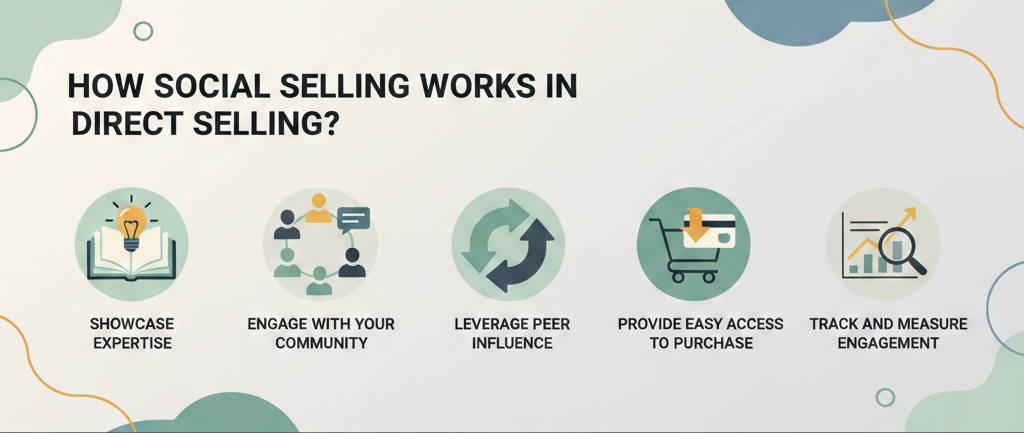
How Social Selling Works in Direct Selling ?
For direct sellers, social selling mirrors the traditional relationship-based approach, but in a digital-first environment. Here’s how it plays out :
1. Showcase Expertise
Share product knowledge, lifestyle tips, and personal experiences with the product. This builds authority and credibility.
2. Engage With Your Community
Reply to comments, answer questions, and participate in group discussions to show responsiveness and care.
3. Leverage Peer Influence
Encourage happy customers and distributors to share their experiences. Word-of-mouth amplified online can reach thousands quickly.
4. Provide Easy Access to Purchase
Use social commerce features like Instagram Shops, Facebook Marketplace, or direct messaging to allow customers to purchase or join easily.
5. Track and Measure Engagement
Using tools like MLM software (e.g., Ventaforce), sellers can see which posts, videos, or influencer partnerships generate the most leads and conversions, helping refine their approach.
A LinkedIn survey shows that sellers who engage consistently on social platforms see a conversion rate increase of 38%, proving that ongoing online engagement pays off in direct sales.
How to Do Social Selling: Step-by-Step Strategies for Direct Sellers in 2026
Social selling is no longer optional—it’s essential for direct sellers who want to grow in 2026. With buyers spending more time on social platforms than ever, the way sellers connect, build trust, and guide prospects has changed dramatically. Here’s a step-by-step strategy to succeed :
Step 1 : Identify Your Target Audience
Before posting or engaging, you need to know who you are connecting with.
- Use social platform tools to identify demographics, interests, and behaviors.
- Join relevant groups or communities where your ideal customers or recruits spend time.
- Focus on niches aligned with your products or business opportunity, e.g., wellness, beauty, lifestyle, or entrepreneurship.
Did You Know?
According to HubSpot, salespeople who define their audience clearly are 42% more likely to generate qualified leads through social media.
Step 2 : Optimize Your Social Profiles
Your profile is your digital first impression. Make it count :
- Use a professional profile picture and banner
- Write a clear bio explaining what you do and the value you provide
- Include links to your product catalog, business opportunity, or landing page
- Highlight achievements, testimonials, or social proof
Why this works
Profiles act as credibility anchors. Prospects often check a seller’s profile before engaging. According to LinkedIn, fully optimized profiles receive 40% more engagement than incomplete ones.
Step 3 : Share Valuable Content Consistently
Content is the heart of social selling. The goal is to educate, inspire, and engage rather than push for a sale.
Types of content to share :
- Educational posts: Tips, how-tos, tutorials
- Experience-based content: Personal stories, product usage, results
- Customer testimonials : Real-life results build trust
- Interactive content: Polls, quizzes, Q&A sessions
Did you know ?
A study by Sprout Social found that brands that post helpful content consistently have 55% higher engagement and follower loyalty, directly impacting sales potential.
Step 4 : Engage and Build Relationships
Posting content alone is not enough. Social selling relies on active engagement :
- Respond to comments and messages promptly
- Participate in group discussions and community posts
- Acknowledge mentions, shares, or tags
- Ask questions to start conversations
Why it works
Engagement builds visibility, familiarity, and trust. Buyers are more likely to purchase from someone who interacts personally rather than someone who only posts content.
Step 5 : Leverage Social Commerce Tools
2026 offers multiple ways to sell directly on social platforms :
- Instagram Shop or Facebook Shop for direct product sales
- Instagram Live or Facebook Live selling to showcase products in real time
- WhatsApp catalogs and messages for personal interactions
- TikTok videos with links to purchase
Did you know ?
According to eMarketer, social commerce is expected to grow over 25% annually, making it one of the fastest channels for direct selling.
Step 6 : Collaborate with Influencers
Influencers amplify your reach and credibility :
- Partner with micro-influencers (smaller, highly engaged audiences) for authenticity
- Encourage influencers to share real experiences or tutorials
- Track performance to see which collaborations drive leads or sales
Fact
Influencer Marketing Hub reports that businesses earn an average of $5.78 for every $1 spent on influencer marketing, making this a highly cost-effective approach.
Step 7 : Track Performance and Refine
Social selling is data-driven. Track what works :
- Engagement rates: Likes, shares, comments
- Lead generation : Messages, inquiries, sign-ups
- Conversion : Sales, sign-ups, or product orders
Use analytics tools provided by the platform or MLM software like Ventaforce to see which content or engagement strategies are most effective.
Did you know ?
Sales teams that regularly monitor social selling metrics see up to 38% higher conversion rates compared to teams that do not.
Step 8 : Nurture Relationships for Long-Term Growth
Social selling is not just about a single sale. Long-term success comes from nurturing relationships :
- Keep following up with leads in a helpful, non-pushy way
- Offer exclusive content, early product access, or rewards for loyal customers
- Create communities or groups for discussions and support
Why it matters
A Harvard Business Review study shows that increasing customer retention by just 5% can boost profits by 25–95%, proving the value of long-term engagement.
Key Takeaways
- Know your audience before posting or connecting
- Optimize your profiles to build trust instantly
- Post valuable content consistently to educate and inspire
- Engage actively to create meaningful relationships
- Use social commerce and live tools for easy purchasing
- Collaborate with influencers to expand reach and credibility
- Track performance and refine strategies regularly
- Nurture long-term relationships to grow sustainable business
Social selling is the bridge between modern digital behavior and traditional relationship-based direct selling. When done strategically, it allows direct sellers to reach more people, build credibility, and drive sales more efficiently than ever before.
What Influencer Marketing Is ?
Influencer marketing involves partnering with individuals who have influence over your target audience to promote products, opportunities, or services. These influencers could be :
- Micro-influencers : 5,000–50,000 followers, high engagement, relatable to your audience
- Macro-influencers : 50,000–500,000 followers, wider reach but less personal connection
- Industry experts or thought leaders : Trusted voices in health, wellness, lifestyle, or entrepreneurship
Influencer marketing has become one of the most effective ways for direct sellers to reach new audiences, build trust, and drive sales. Instead of relying solely on your own network, you leverage the credibility and reach of individuals who already have an engaged audience.
Did you know ?
According to Influencer Marketing Hub 2025, businesses earn an average of $5.78 for every $1 spent on influencer marketing, proving it’s one of the highest ROI strategies available.
What Influencer Marketing Is ?
Influencer marketing works because people trust recommendations from real people more than brands. In direct selling, this has a unique advantage :
1. Credibility Transfer
When a trusted influencer shares your product, their audience assumes it is credible and safe.
2. Reach Expansion
Influencers introduce your product or opportunity to audiences that might never have found you.
3. Social Proof
Seeing others use and recommend your product encourages followers to engage and buy.
Did you know ?
The Edelman Trust Barometer 2025 found that over 70% of consumers trust recommendations from people they follow online more than traditional advertising, making influencer marketing a critical tool for direct sellers.
Why Micro-Influencers Are Often Better for Direct Selling
While celebrities have large audiences, micro-influencers often deliver higher engagement and more qualified leads.
- Audiences feel they know the influencer personally, which increases trust.
- Recommendations feel relatable and achievable, encouraging followers to act.
- Engagement rates for micro-influencers are typically 60–70% higher than macro-influencers, making them ideal for relationship-based businesses like direct selling.
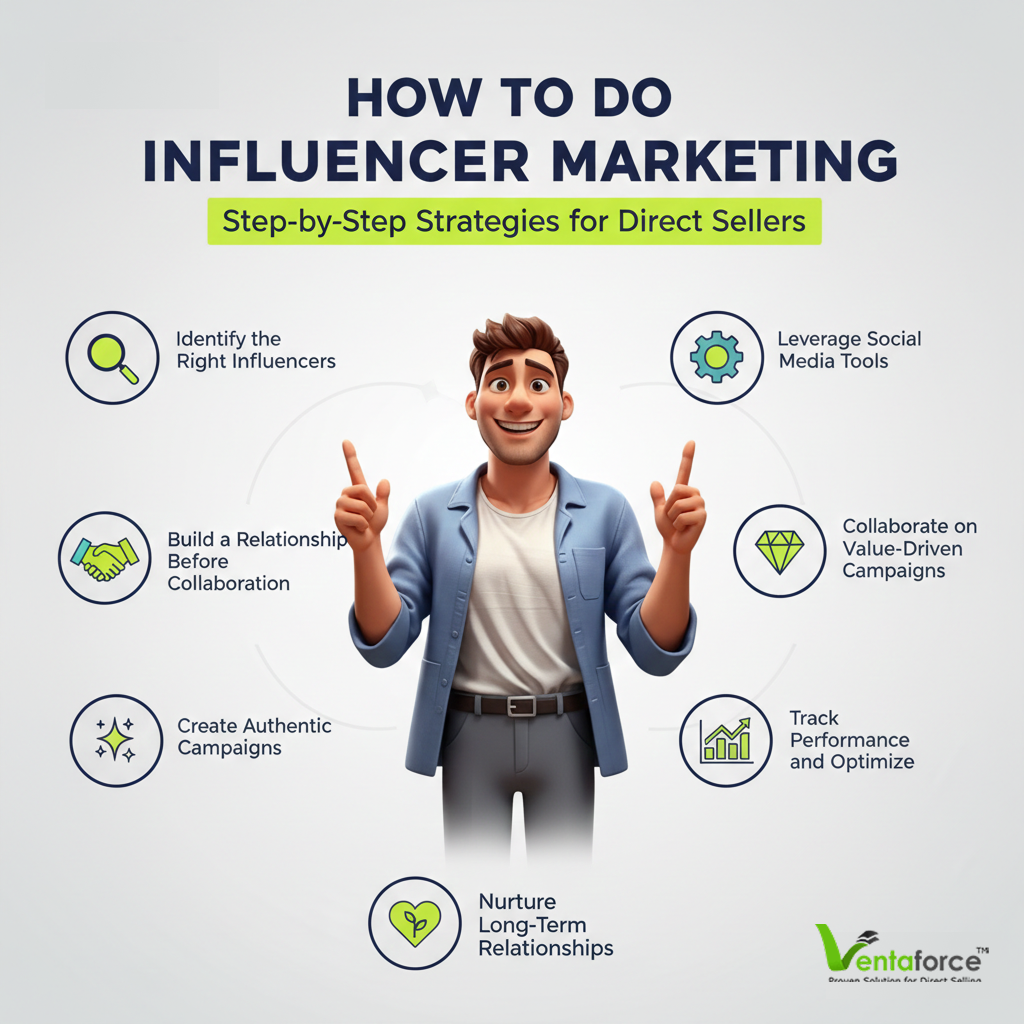
How to Do Influencer Marketing: Step-by-Step Strategies for Direct Sellers in 2026
Influencer marketing is no longer optional for direct sellers—it is a powerful tool to grow visibility, credibility, and sales in 2026. Done correctly, it allows distributors to reach audiences beyond their immediate network and build trust through authentic voices. Here’s a step-by-step strategy to implement influencer marketing effectively :
Step 1 : Identify the Right Influencers
The first step is to find influencers whose audience matches your target customers.
- Look for micro-influencers (5k–50k followers) who have high engagement and relatable content.
- Consider macro-influencers (50k–500k followers) for larger campaigns, but ensure they align with your product or niche.
- Focus on relevance, engagement, and authenticity rather than just follower count.
Did you know ?
Research from Influencer Marketing Hub shows that micro-influencers often achieve 60–70% higher engagement rates than larger influencers, making them ideal for direct selling.
Step 2 : Build a Relationship Before Collaboration
Before asking influencers to promote your product :
- Follow them and engage genuinely with their content
- Comment, like, or share posts to show interest
- Start conversations to understand their audience and values
Why this works :
Influencers prefer working with sellers who respect their voice. Long-term partnerships often produce better results than one-off promotions.
Step 3 : Create Authentic Campaigns
Authenticity is key in direct selling :
- Allow influencers to share real experiences with your product
- Avoid scripted, over-promotional messaging
- Encourage storytelling: “How this product helped me…” or “My journey with this opportunity…”
Did you know ?
According to Mediakix, 25% of consumers made a purchase directly due to influencer recommendations, proving that authentic promotion drives results.
Step 4 : Leverage Social Media Tools
Influencers have access to tools that make social selling easier :
- Instagram Reels, Stories, and Live for product demos
- Facebook Groups and Marketplace to share offers
- TikTok videos to showcase products or business opportunities
- Swipe-up links and affiliate links for direct purchase or sign-up
Tip
Use MLM software like Ventaforce to track leads, commissions, and influencer performance in real time.
Step 5 : Collaborate on Value-Driven Campaigns
Successful campaigns focus on providing value first, not just selling :
- Tutorials or “how-to” videos
- Challenges or giveaways
- Q&A sessions with the influencer
- Highlighting real customer resultsand affiliate links for direct purchase or sign-up
This approach naturally builds trust and encourages audience participation.
Step 6 : Track Performance and Optimize
Influencer marketing is data-driven. Measure :
- Engagement : likes, comments, shares
- Reach : how many people viewed the post
- Leads : messages, inquiries, sign-ups
- Conversions : purchases or recruits
Did you know ?
Companies that track influencer campaigns systematically see up to 38% higher conversion rates, according to LinkedIn’s State of Sales report.
Step 7 : Nurture Long-Term Relationships
One-time campaigns rarely produce lasting results. Instead :
- Build long-term partnerships with influencers
- Provide incentives for continuous promotion
- Share campaign results to show mutual benefit
Why it works
Long-term influencer relationships create consistent visibility, stronger credibility, and ongoing sales.
Key Takeaways
- Find the right influencers aligned with your audience
- Build relationships first before collaboration
- Focus on authentic storytelling and real experiences
- Use social media tools to reach and engage audiences
- Provide value in campaigns beyond just selling
- Track results and optimize campaigns
- Invest in long-term partnerships for ongoing growth
Conclusion : The Future of Direct Selling in 2026
The future of the direct selling industry, MLM, network marketing, and affiliate marketing is digital, relationship-driven, and trust-based. Social selling and influencer marketing are no longer optional—they are essential for sustainable growth.
Direct sellers who focus on authentic engagement, consistent value, and strategic partnerships will not only stay competitive in 2026 but lead the next generation of direct selling success.
Frequently Asked Questions (FAQ)
Social selling in the direct selling industry is the practice of using social media platforms to build trust, educate audiences, and form relationships that lead to product sales or MLM business sign-ups. Instead of cold outreach, direct sellers attract customers through content, engagement, and consistent online presence.
Social selling works for MLM and network marketing businesses by allowing distributors to showcase products, share real experiences, and engage with prospects online. This builds credibility over time, making it easier to convert followers into customers or team members without aggressive selling tactics.
Social selling is important for direct sellers in 2026 because buyers now research products and business opportunities online before making decisions. Social selling helps MLM and direct selling professionals stay visible, build trust faster, and reach a wider audience through digital platforms.
The best platforms for social selling include Instagram, Facebook, TikTok, LinkedIn, and WhatsApp. Instagram and TikTok work well for product demonstrations and lifestyle content, Facebook Groups support community building, LinkedIn suits professional network marketing, and WhatsApp enables personal communication and follow-ups.
Influencer marketing in direct selling involves partnering with trusted content creators to promote products or business opportunities to their audience. These influencers help MLM and network marketing businesses gain credibility, expand reach, and generate qualified leads through authentic recommendations.
Influencer marketing helps MLM businesses grow by transferring trust from influencers to products or opportunities. When influencers share real experiences, their audience is more likely to explore, engage, and convert—resulting in higher-quality leads and faster business growth.
Yes, micro-influencers are often better for network marketing because they have smaller but highly engaged audiences. Their recommendations feel more personal and relatable, which leads to higher engagement rates and better conversion compared to large influencers with less personal interaction.
Beginners can start social selling by:
- Optimizing their social media profile
- Posting helpful and educational content
- Engaging with comments and messages
- Sharing personal product experiences
- Avoiding hard selling and focusing on relationships
Consistency and value are more important than follower count.
Results from social selling typically appear within 3 to 6 months of consistent activity. Direct sellers who post regularly, engage authentically, and nurture relationships tend to see faster growth in leads, trust, and conversions compared to those using traditional methods alone.
Social selling does not replace traditional direct selling—it enhances it. The core principle of relationship-building remains the same, but social selling allows those relationships to scale digitally, helping direct sellers reach more people efficiently and consistently.
MLM software supports social selling and influencer marketing by tracking leads, engagement, commissions, and conversions. Platforms like Ventaforce MLM software help direct selling companies analyze which social channels, content, and influencer partnerships drive the best results.
Yes, social selling is ethical when done transparently. Ethical social selling focuses on honest communication, real experiences, accurate product claims, and clear disclosures—helping MLM and direct selling businesses build long-term trust and credibility.
The future of social selling and influencer marketing lies in authentic content, community-driven engagement, and creator partnerships. As digital trust becomes more important, direct selling and network marketing businesses that prioritize relationships over pitching will dominate growth in the coming years.